Sale Price:
$59.00
Original Price:
$99.00
ABA social skills curriculum for autistic teens and adults, includiing printable client materials and ACT activities.
Your client can engage in 5 conversational exchanges, ask and answer WH questions, and tell you the difference between a stranger, an acquaintance, and a friend.
So what comes next?
The Chatterfly Curriculum: Social Skills for Teens and Adults is a comprehensive ABA social skills curriculum and clinical guide for teaching advanced communication skills to autistic adolescents and adults. Designed for use in individual and group settings, the curriculum covers 69 goals across 15 skill areas, from finding common interests and suggesting plans to navigating the workplace, dating, and online safety. Approximately half of clinical guide consists of Client Resources & Materials that can be printed and used again and again across clients.
Each chapter follows a consistent structure:
This curriculum is built on applied behavior analysis and a neuroaffirming approach. It promotes respect for individual communication styles. It fosters self-advocacy skills and encourages clients to build skills that serve their own goals and values by integrating ACT-based activities.
This curriculum pairs well with the Chatterfly Social Skills app, a BCBA-designed tool built on BST. The app helps support generalization and maintenance of skills as clients can practice each skill between sessions with Marin, an AI social skills coach who provides real-time conversational practice and feedback.
The curriculum covers the following skill areas:
Making Connections and Starting Conversations
Setting Communication Style Expectations
Casual Conversations and Remaining on Topic
Navigating Topic Shifts
Making Small Talk
Finding Common Interests
Suggesting Plans
Conversational Storytelling
Perspective Taking and Offering Support
Navigating Nonliteral Language
Resolving Conflict
Conversations with Service Workers and Healthcare Providers
Employment and Related Communication Skills
Dating Related Communication
Digital Communication and Online Safety
ABA social skills curriculum for autistic teens and adults, includiing printable client materials and ACT activities.
Your client can engage in 5 conversational exchanges, ask and answer WH questions, and tell you the difference between a stranger, an acquaintance, and a friend.
So what comes next?
The Chatterfly Curriculum: Social Skills for Teens and Adults is a comprehensive ABA social skills curriculum and clinical guide for teaching advanced communication skills to autistic adolescents and adults. Designed for use in individual and group settings, the curriculum covers 69 goals across 15 skill areas, from finding common interests and suggesting plans to navigating the workplace, dating, and online safety. Approximately half of clinical guide consists of Client Resources & Materials that can be printed and used again and again across clients.
Each chapter follows a consistent structure:
This curriculum is built on applied behavior analysis and a neuroaffirming approach. It promotes respect for individual communication styles. It fosters self-advocacy skills and encourages clients to build skills that serve their own goals and values by integrating ACT-based activities.
This curriculum pairs well with the Chatterfly Social Skills app, a BCBA-designed tool built on BST. The app helps support generalization and maintenance of skills as clients can practice each skill between sessions with Marin, an AI social skills coach who provides real-time conversational practice and feedback.
The curriculum covers the following skill areas:
Making Connections and Starting Conversations
Setting Communication Style Expectations
Casual Conversations and Remaining on Topic
Navigating Topic Shifts
Making Small Talk
Finding Common Interests
Suggesting Plans
Conversational Storytelling
Perspective Taking and Offering Support
Navigating Nonliteral Language
Resolving Conflict
Conversations with Service Workers and Healthcare Providers
Employment and Related Communication Skills
Dating Related Communication
Digital Communication and Online Safety
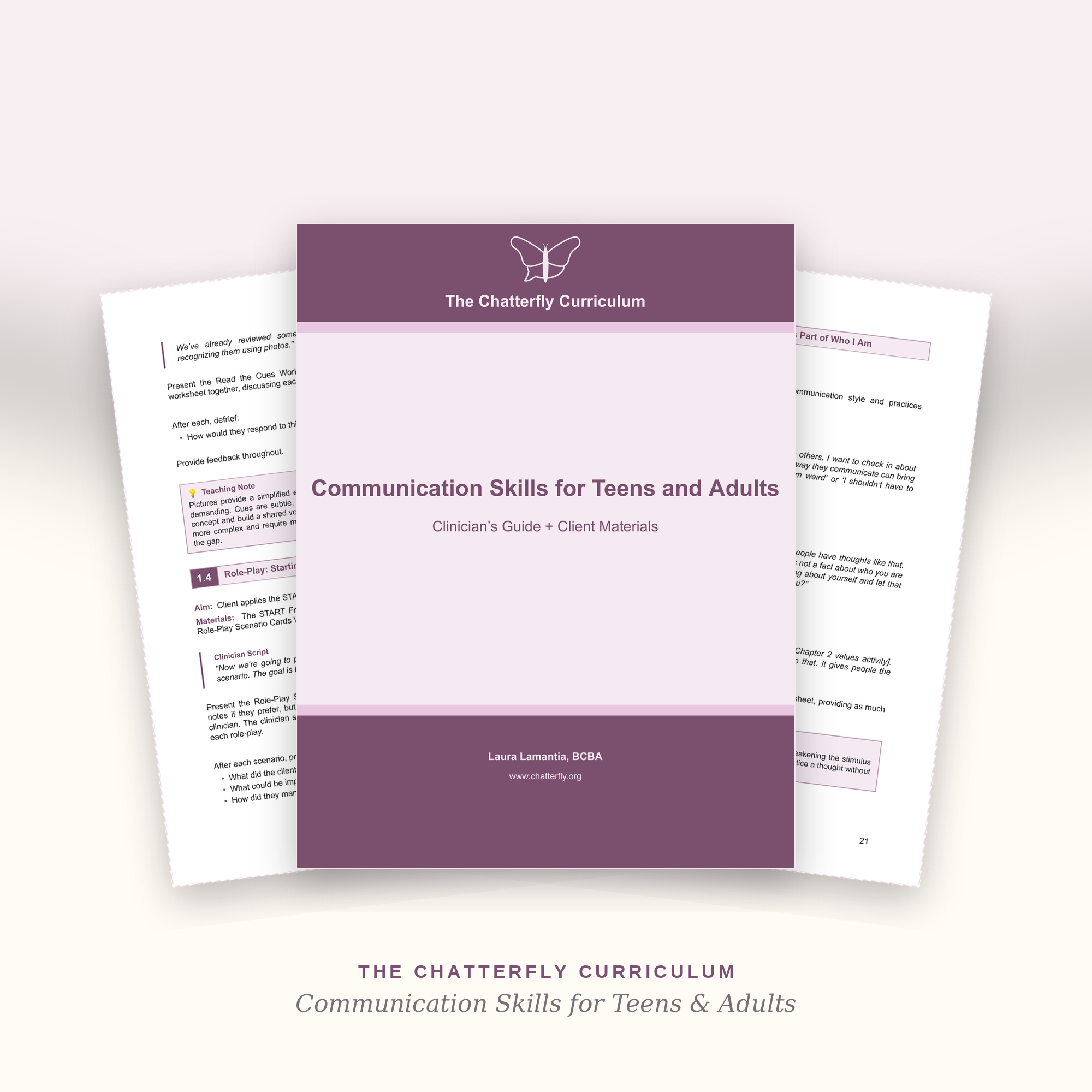 Image 1 of 12
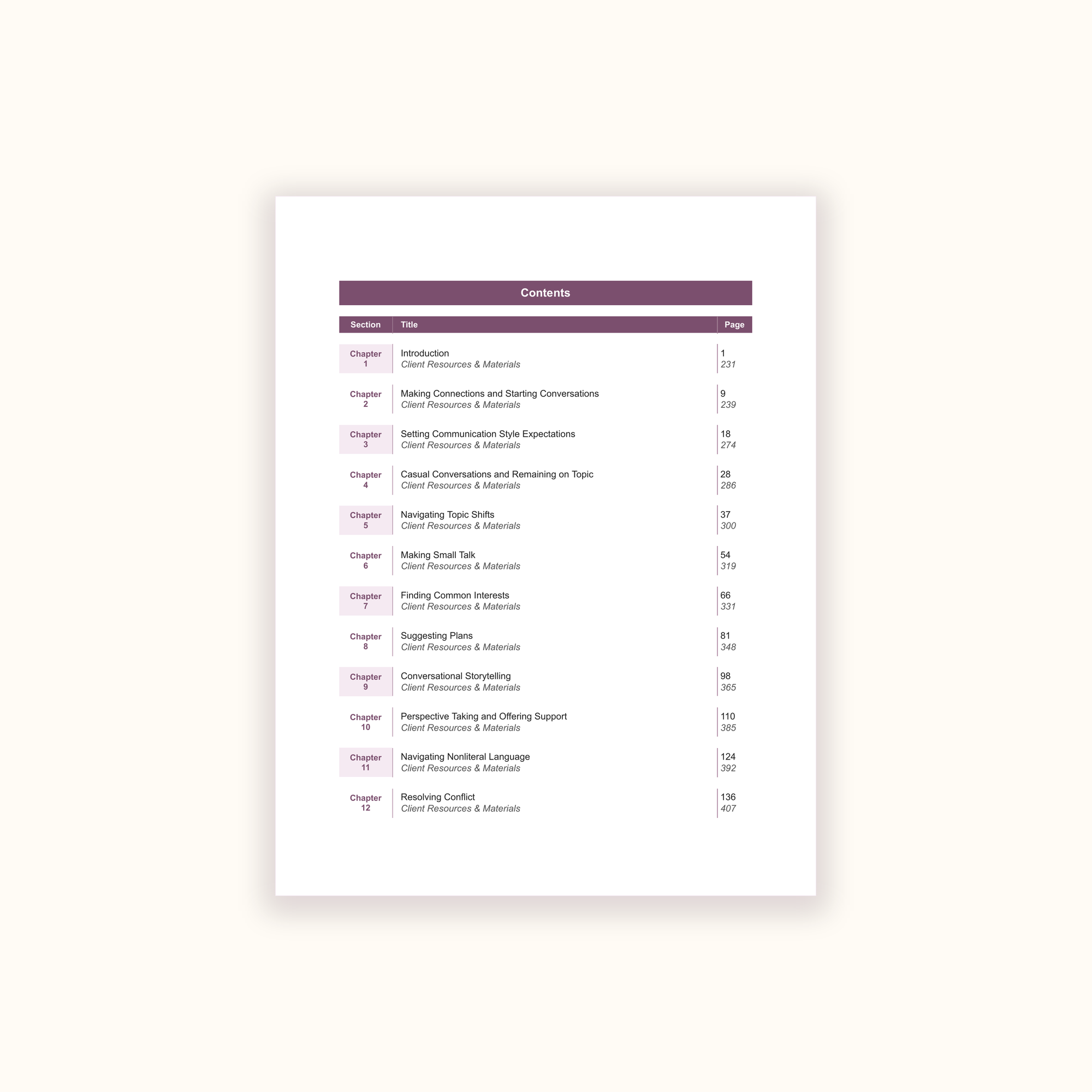 Image 2 of 12
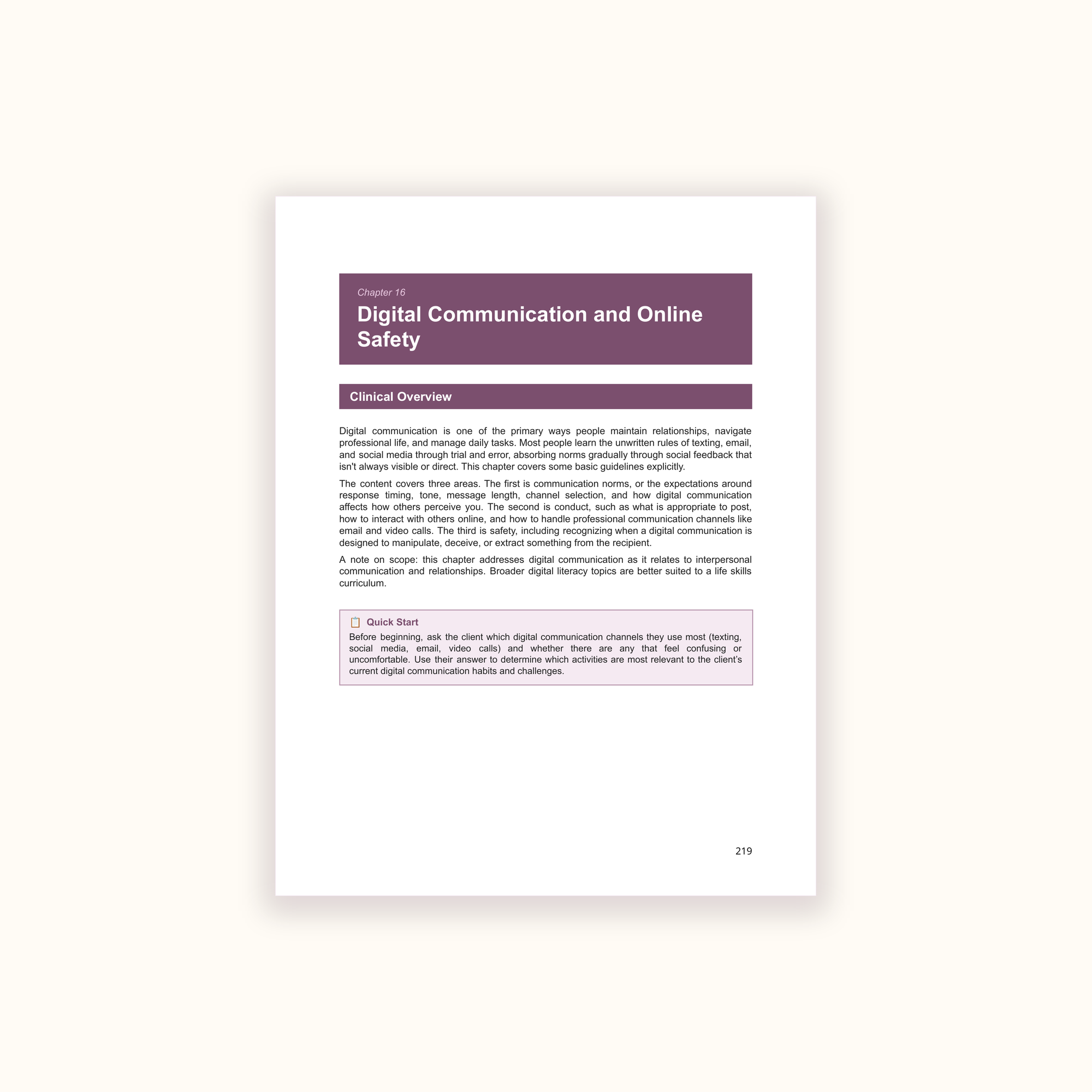 Image 3 of 12
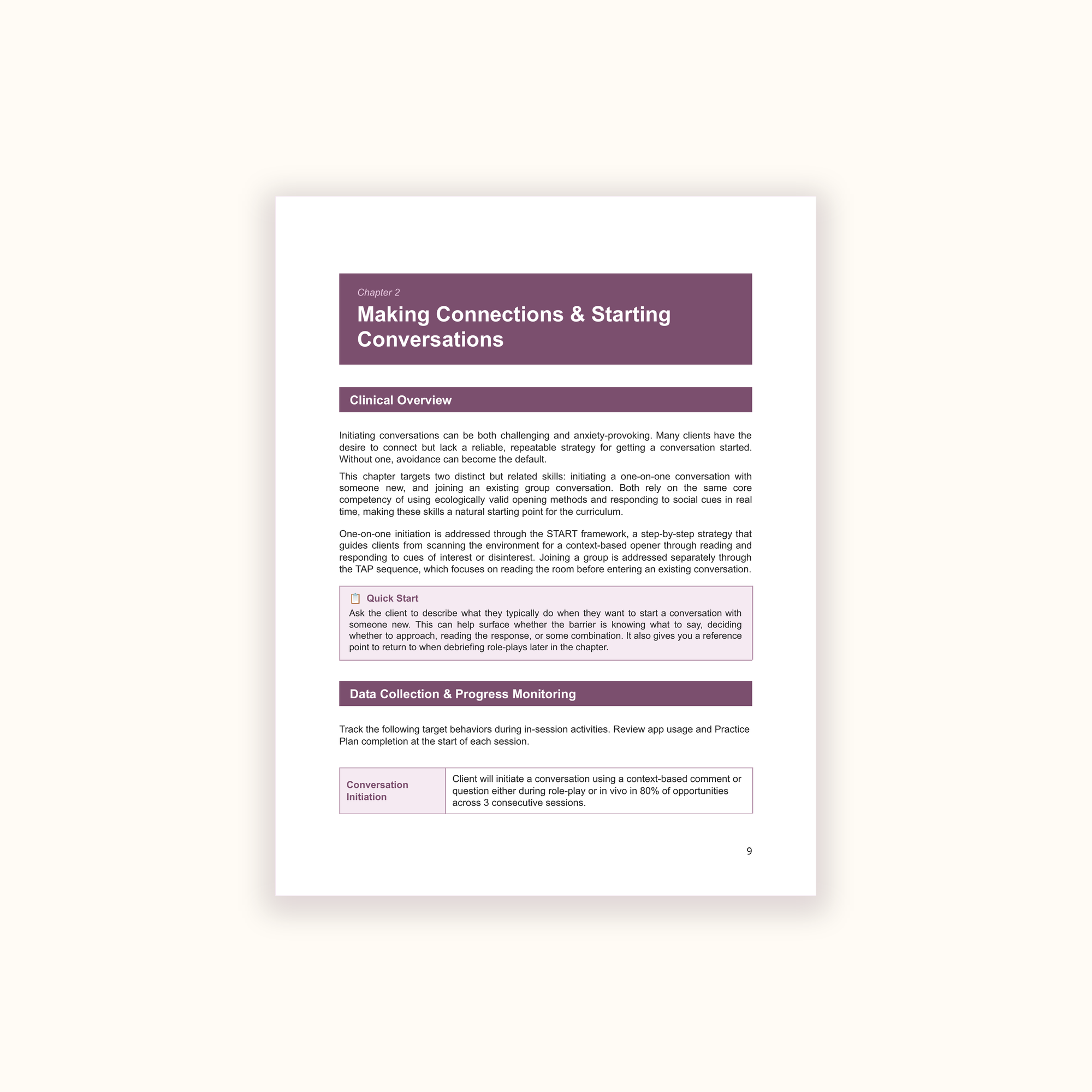 Image 4 of 12
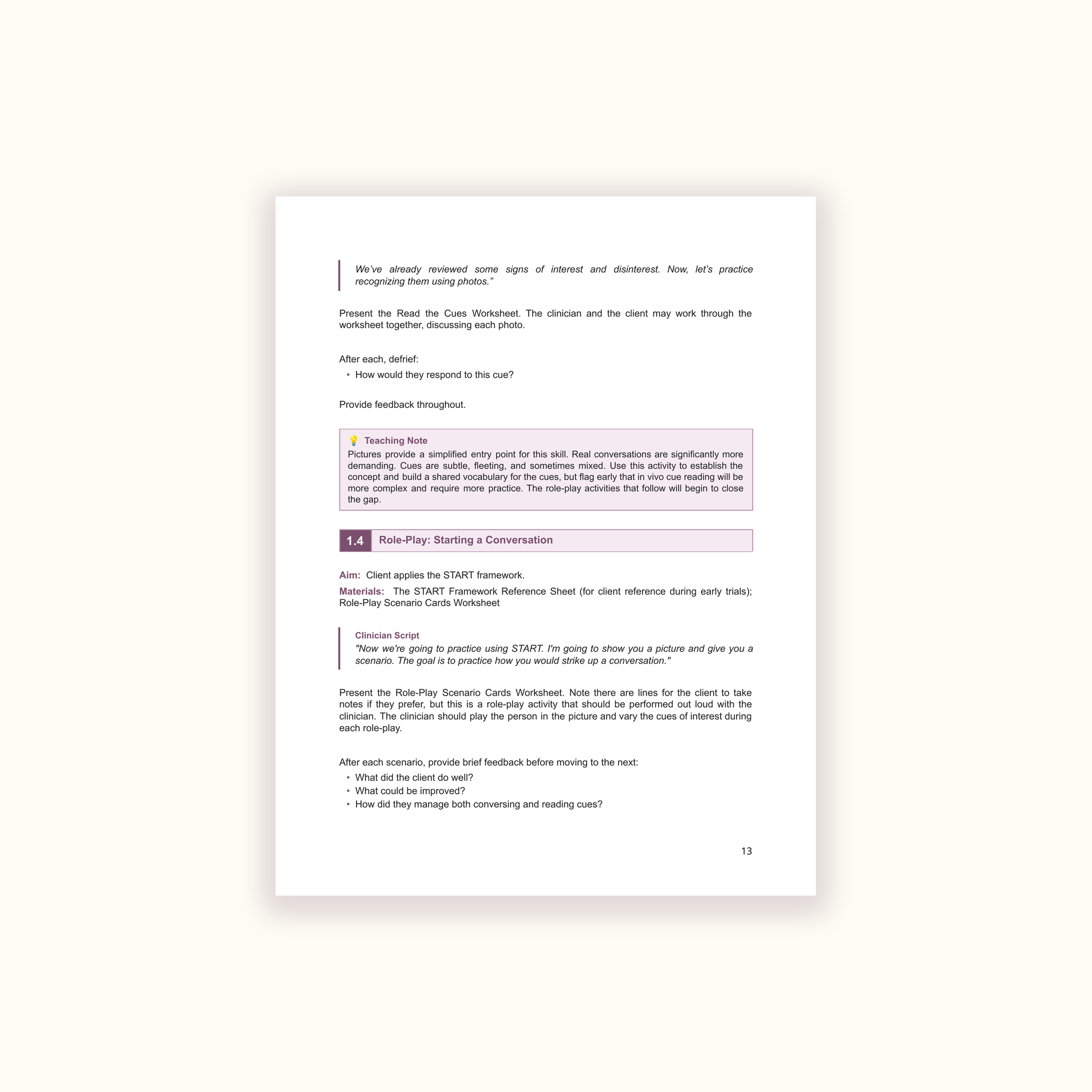 Image 5 of 12
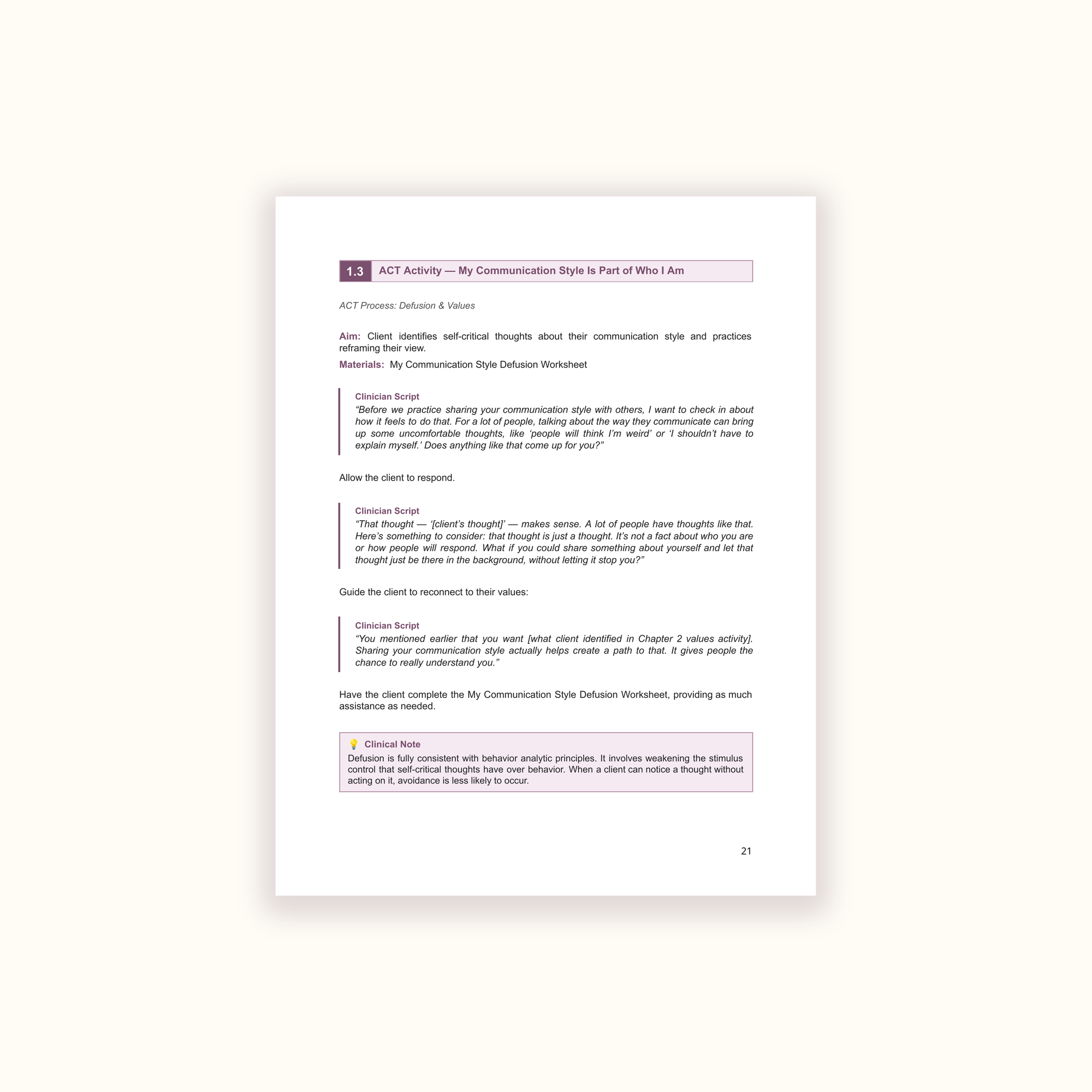 Image 6 of 12
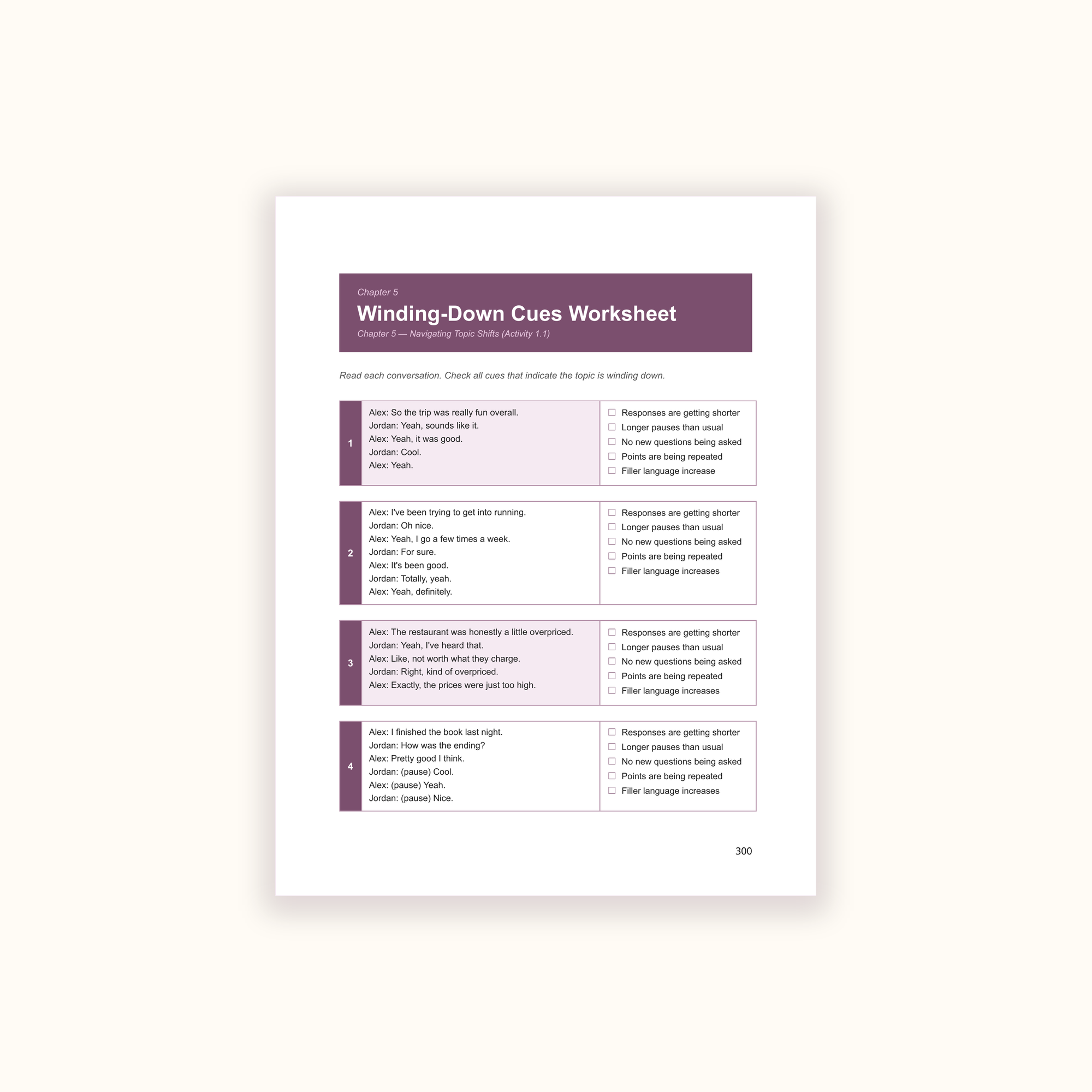 Image 7 of 12
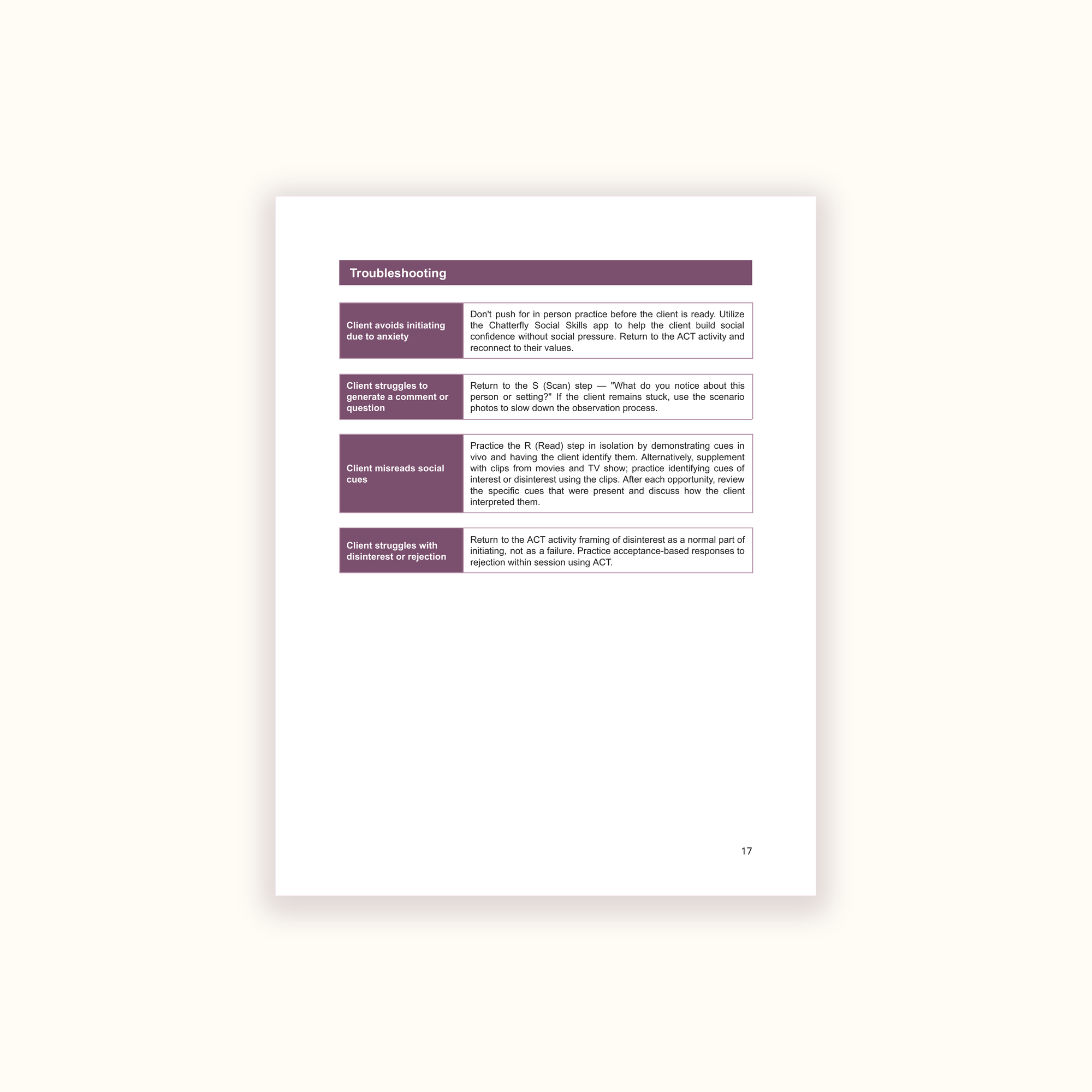 Image 8 of 12
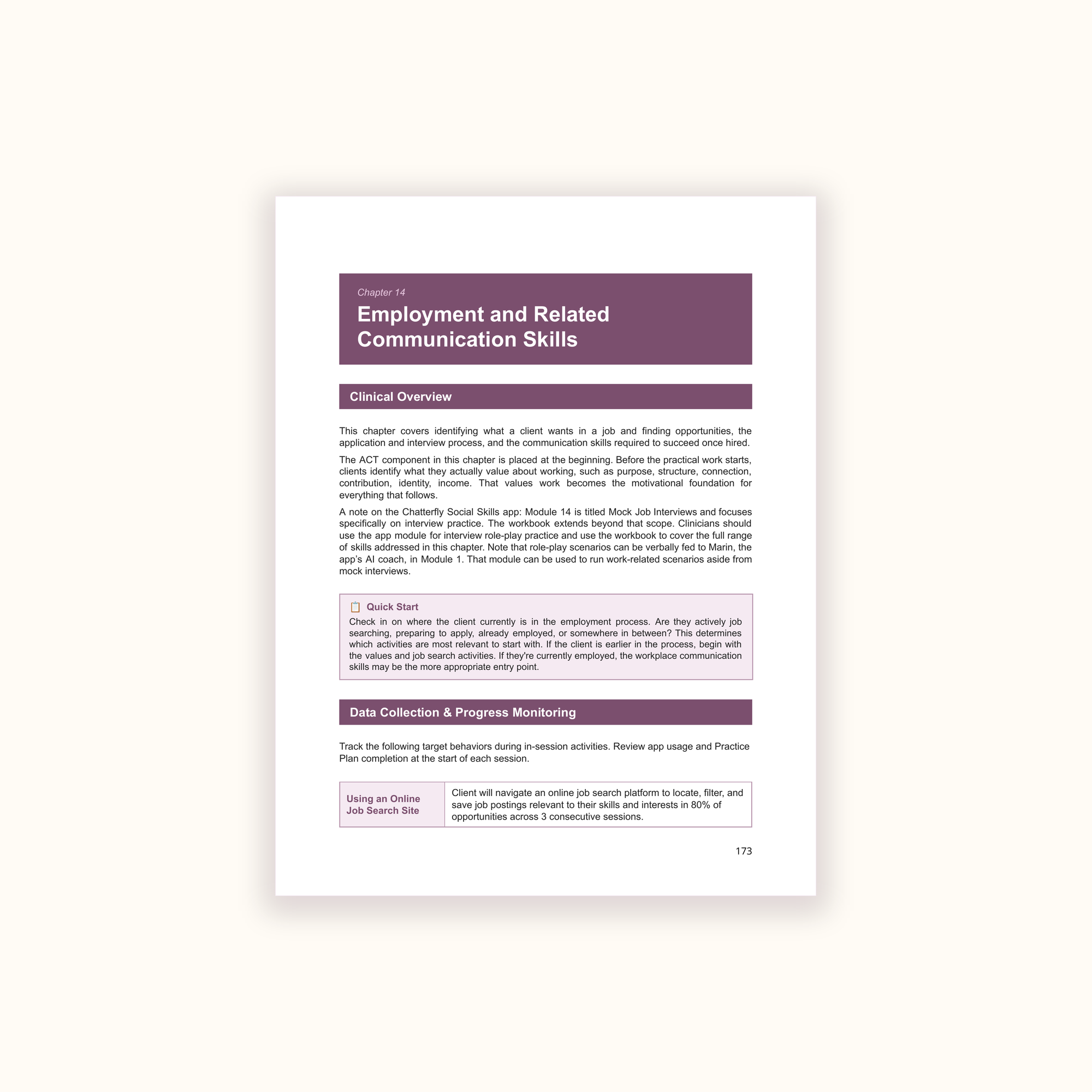 Image 9 of 12
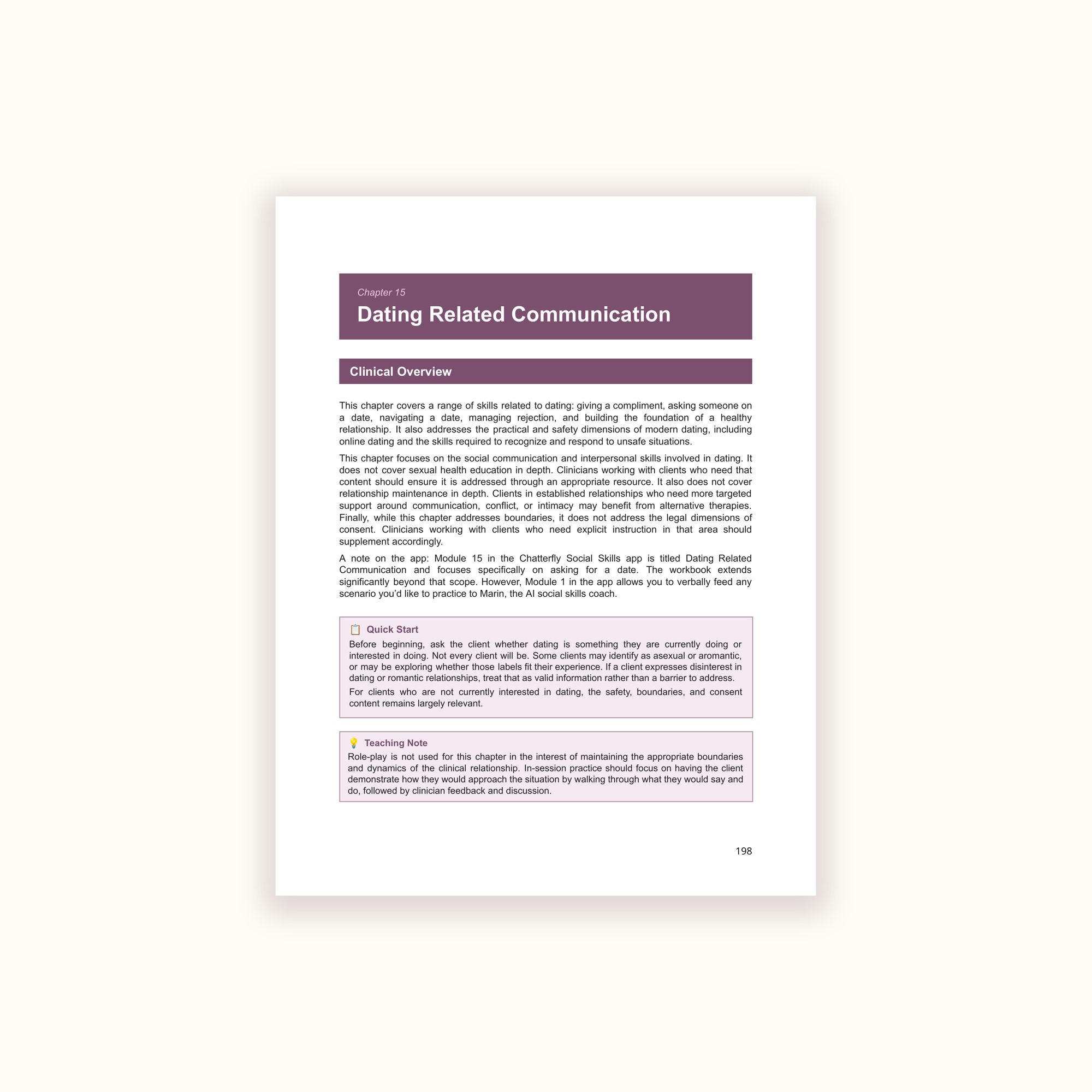 Image 10 of 12
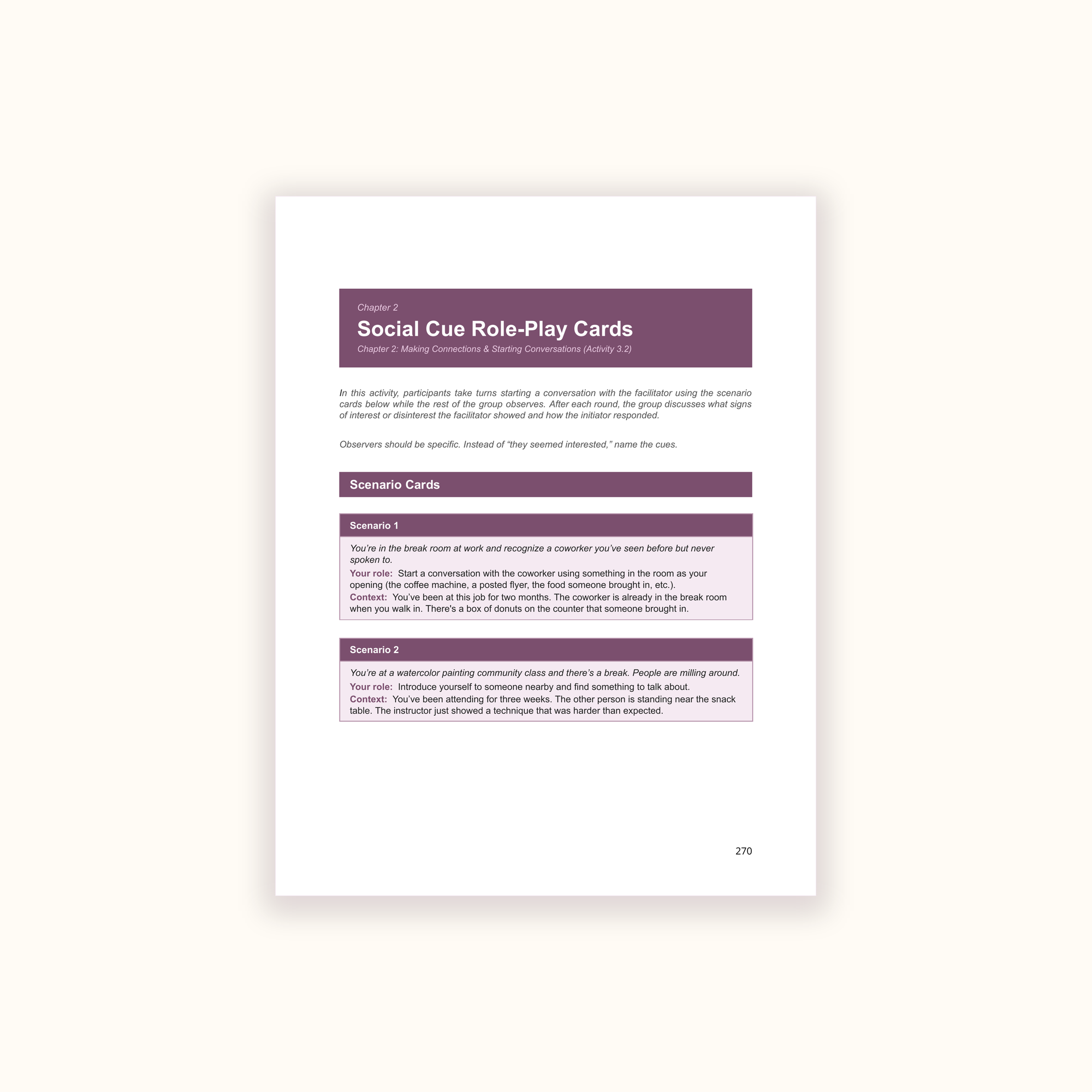 Image 11 of 12
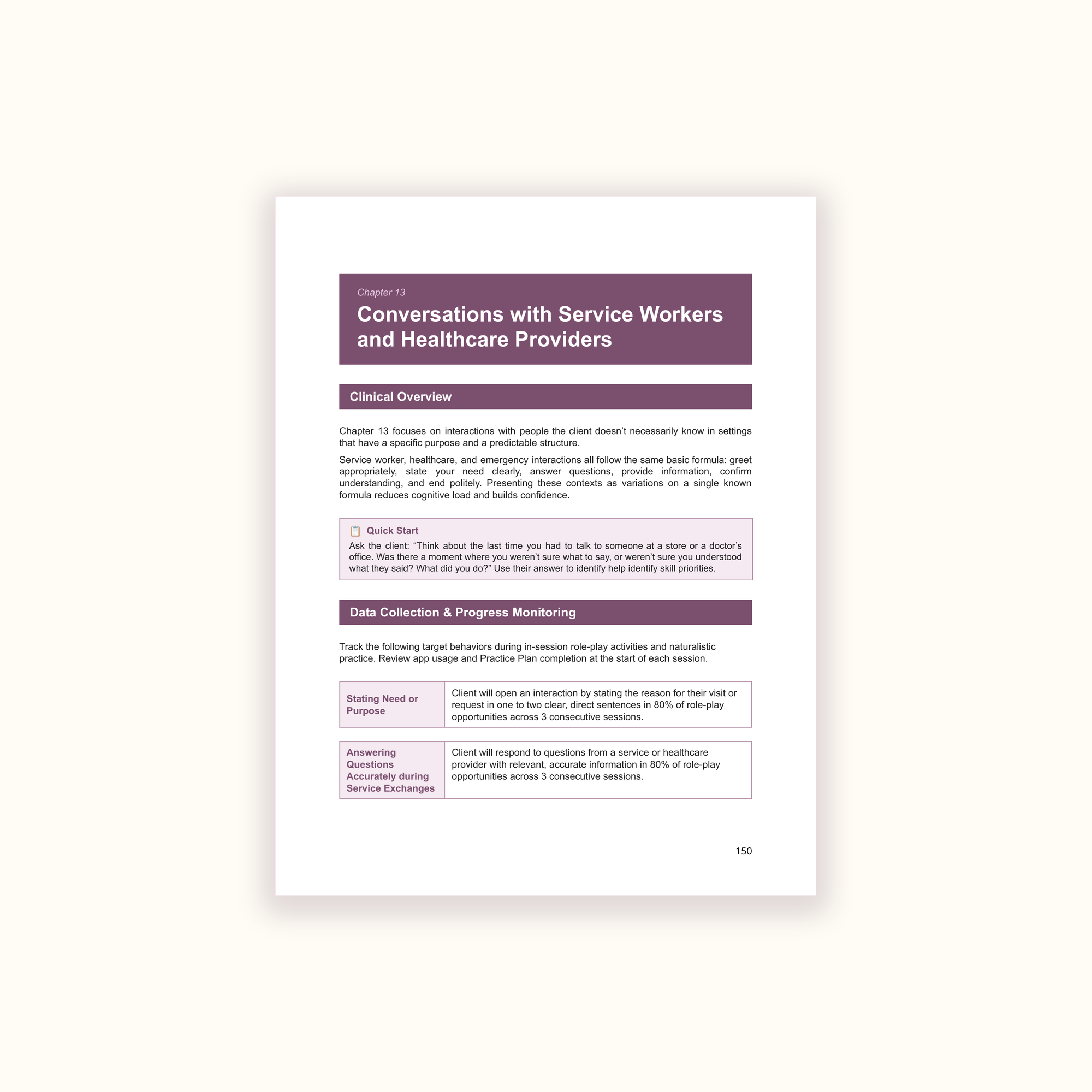 Image 12 of 12