 Image 1 of 2
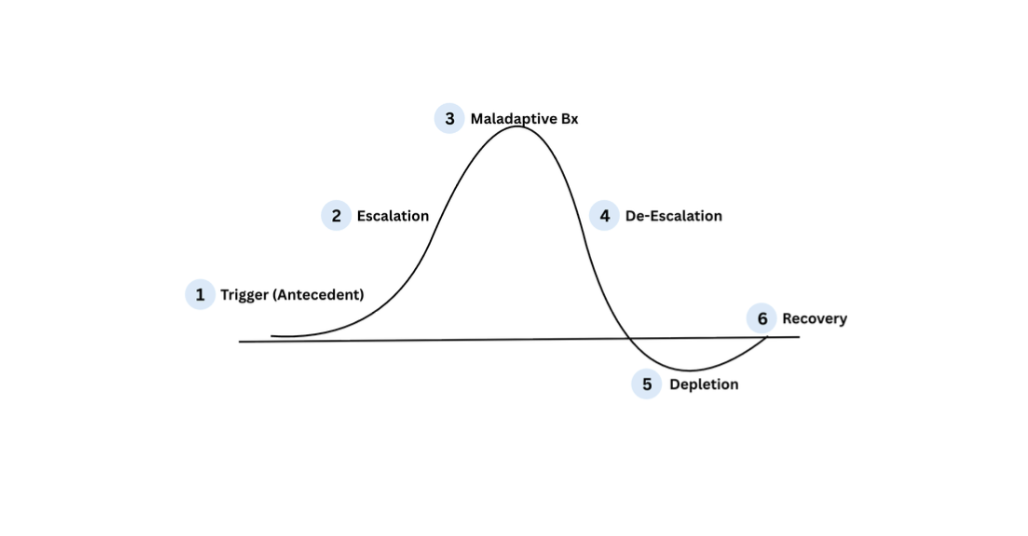 Image 2 of 2
Free Resource for BCBAs, RBTs, and other ABA Practitioners!
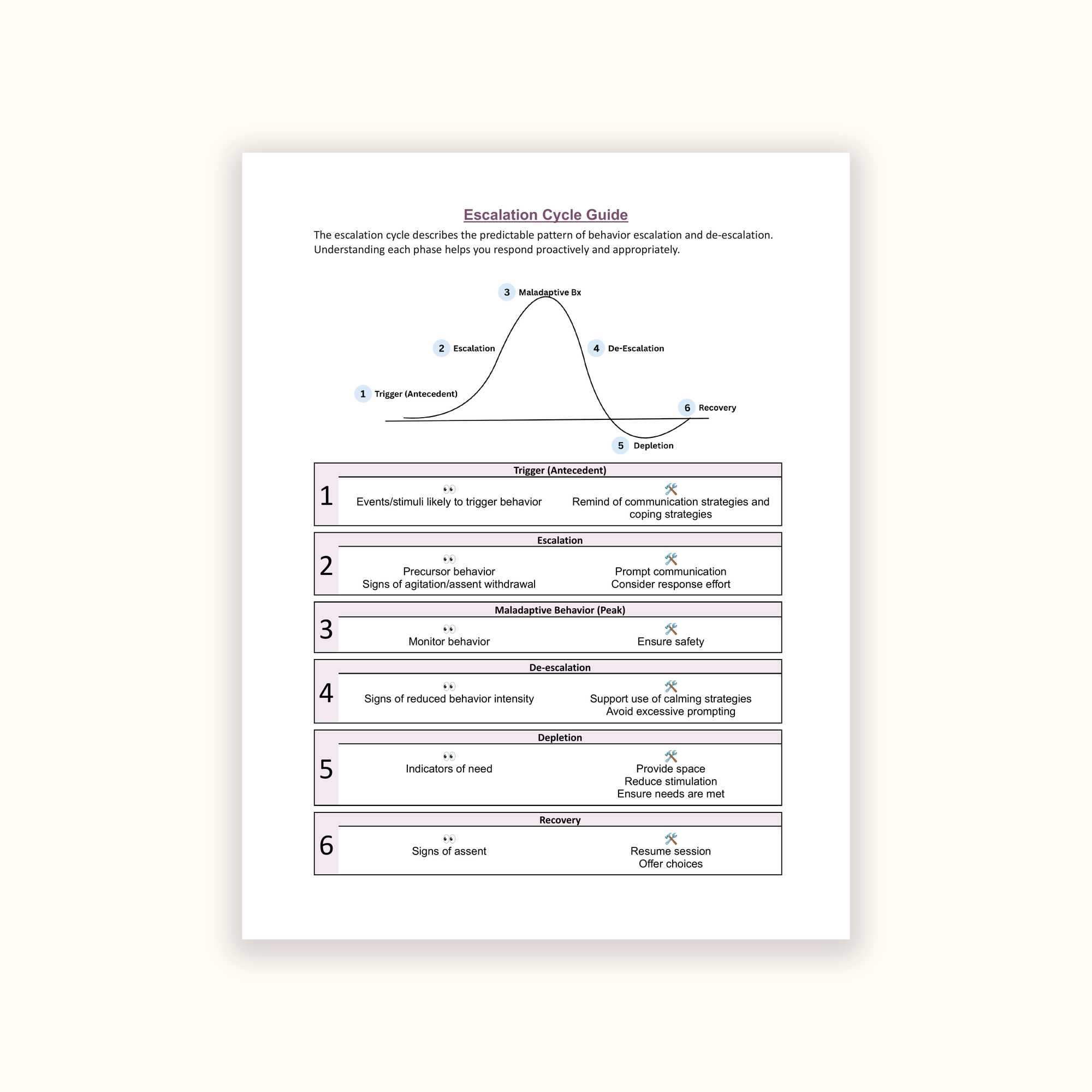
A one-page reference for the escalation cycle, which is the predictable pattern behavior follows from trigger through recovery.
This guide details the 6 phases of behavior escalation and explains what to watch for and what to do during each.
The six phases:
Trigger (antecedent) — events likely to set the behavior off; remind the learner of communication and coping strategies
Escalation — precursor behavior, agitation, assent withdrawal; prompt communication and consider response effort
Maladaptive behavior (peak) — monitor behavior and ensure safety
De-escalation — reduced intensity; support calming strategies, avoid excessive prompting
Depletion — indicators of need; provide space, reduce stimulation, ensure needs are met
Recovery — signs of assent; resume the session and offer choices
BCBA Tip: print this out & put it in your client’s binder!
Free Resource for BCBAs, RBTs, and other ABA Practitioners!
A one-page reference for the escalation cycle, which is the predictable pattern behavior follows from trigger through recovery.
This guide details the 6 phases of behavior escalation and explains what to watch for and what to do during each.
The six phases:
Trigger (antecedent) — events likely to set the behavior off; remind the learner of communication and coping strategies
Escalation — precursor behavior, agitation, assent withdrawal; prompt communication and consider response effort
Maladaptive behavior (peak) — monitor behavior and ensure safety
De-escalation — reduced intensity; support calming strategies, avoid excessive prompting
Depletion — indicators of need; provide space, reduce stimulation, ensure needs are met
Recovery — signs of assent; resume the session and offer choices
BCBA Tip: print this out & put it in your client’s binder!